Skip to content
Train My Hands for War taped-hand markTrain My Hands

First class

First class guide for beginners

You do not need to be in shape, know the positions, or prove anything. Come clean, come coachable, and come ready to work. We will show you how to stand, fall, move, tap, and train safely.

Start here

What Jiu-Jitsu actually is

Brazilian Jiu-Jitsu is a grappling-based martial art and combat sport built around clinching, takedowns, positional control, escapes, and submissions. It is practiced in a gi or no-gi. Sport BJJ and real-world self-protection overlap, but they are not identical: awareness, de-escalation, disengagement, and escape come first in self-defense.

Run of show

Exactly how the 90 minutes go

  • 6:15–6:30Arrival, registration and waiver check, loaner gi, questions.
  • 6:30–6:36Welcome, prayer, safety theme.
  • 6:36–6:48Scalable movement preparation, ukemi, technical stand-up.
  • 6:48–7:08Standing skill and controlled drilling.
  • 7:08–7:33Ground position: escape, reversal, controlled attack.
  • 7:33–7:50Beginner positional lane and experienced controlled-roll lane.
  • 7:50–8:00Line-up, prayer requests, prayer out.

No pre-fatigue rituals. Optional conditioning comes after technique and is always scalable.

Wear and bring

  • A clean, fully dried gi (jacket, pants, belt). No belt yet? No problem — we will show you how to tie one.
  • A fitted rashguard or athletic shirt and compression shorts under the gi.
  • Sandals or slides for all off-mat areas, especially restrooms.
  • Water bottle and a towel. Nobody shares towels or bottles.
  • Mouthguard strongly recommended for live rounds. Clean ear guards optional.
  • Trimmed fingernails and toenails. No rings, watches, necklaces, bracelets, or catchable piercings.

Loaner gi

Request in advance

Loaner gis are available by advance request, subject to size and availability. Request one on your reservation, reserve early, and bring a rashguard either way.

Buying your own

Fit varies by manufacturer and includes A0, A1L, A2H, and other builds. Use the current chart for the brand you choose:

Sizing and fit for youth

Youth gis are usually sized M0–M4 or K000–K3 by height and weight, not age. When in doubt, size down for a closer fit — a gi that is too long can be shrunk slightly, but one that is too short cannot be lengthened. Check the brand's current chart and measure wingspan (fingertip to fingertip) and inseam before ordering.

  • • M0 / K000–K00: roughly 3′6″–3′10″, 35–45 lb
  • • M1 / K0–K1: roughly 3′10″–4′2″, 45–60 lb
  • • M2 / K2–K3: roughly 4′2″–4′6″, 60–80 lb
  • • M3+: roughly 4′6″–5′, 80–100 lb

These are common ranges; always verify against the manufacturer's latest chart. Bring a backup drawstring and athletic tape on the first night in case sleeves or pants need a quick roll.

Recommendations are not paid endorsements unless disclosed.

Tie your belt

Five steps, flat knot

Jump to Jiu-Jitsu rank and belt explained
  1. 1Step 1
    Belt tying step 1: Find the middle of the belt and place it across your stomach, just below the navel.middle of belt

    Find the middle of the belt and place it across your stomach, just below the navel.

  2. 2Step 2
    Belt tying step 2: Wrap both ends behind you, cross them at your back, and bring them forward.cross behind your back

    Wrap both ends behind you, cross them at your back, and bring them forward.

  3. 3Step 3
    Belt tying step 3: Tuck both layers up under all wraps from the bottom, then pull snug.tuck up under both wraps

    Tuck both layers up under all wraps from the bottom, then pull snug.

  4. 4Step 4
    Belt tying step 4: Cross the right end over the left, then feed it up through the loop you just formed.

    Cross the right end over the left, then feed it up through the loop you just formed.

  5. 5Step 5
    Belt tying step 5: Pull both ends firmly outward. Even ends, flat knot, centered on your waist.

    Pull both ends firmly outward. Even ends, flat knot, centered on your waist.

Diagrams show your own waist as you look down. Written steps are here on purpose — the video is optional. Ask any member on Friday and they will walk you through it.

Watch: How to tie your belt

Text summary

A short walkthrough of tying a BJJ belt so it holds through a round: center the belt on your waist, wrap twice, keep the tails even, and finish with a square knot that lies flat.

Read the transcript — Belt tying, step by step

Find the middle of the belt and hold it against your stomach, just below the navel.

Wrap both ends around your back and bring them to the front, keeping the wraps flat and not twisted.

Tuck one end under both layers of the belt and pull it up, then even out the two tails.

Cross the top tail over the bottom, feed it up through the loop, and pull both ends firmly to set a square knot.

If the tails are uneven or the knot rolls sideways, untie and reset — a loose belt comes apart mid-round.

Instructional videos are educational and are not a substitute for supervised training. Do not practice submissions or takedowns without qualified coaching and a consenting partner.

Belt progression

From white to coral

Back to Tie your belt

Brazilian Jiu-Jitsu ranks progress through colored belts. Each color marks a season of learning, not a trophy. The timelines below are honest averages — individual progress depends on consistency, attitude, and time on the mat.

Watch: Jiu-Jitsu rank and belt explained

Text summary

A clear breakdown of the Brazilian Jiu-Jitsu belt order, what each color represents, and how rank progression works from white to black belt.

Read the transcript — Belt progression overview

White belt: the beginning. Focus is on survival, basic positions, and learning how to train safely.

Blue belt: the first big milestone. Students begin chaining techniques and developing a personal game.

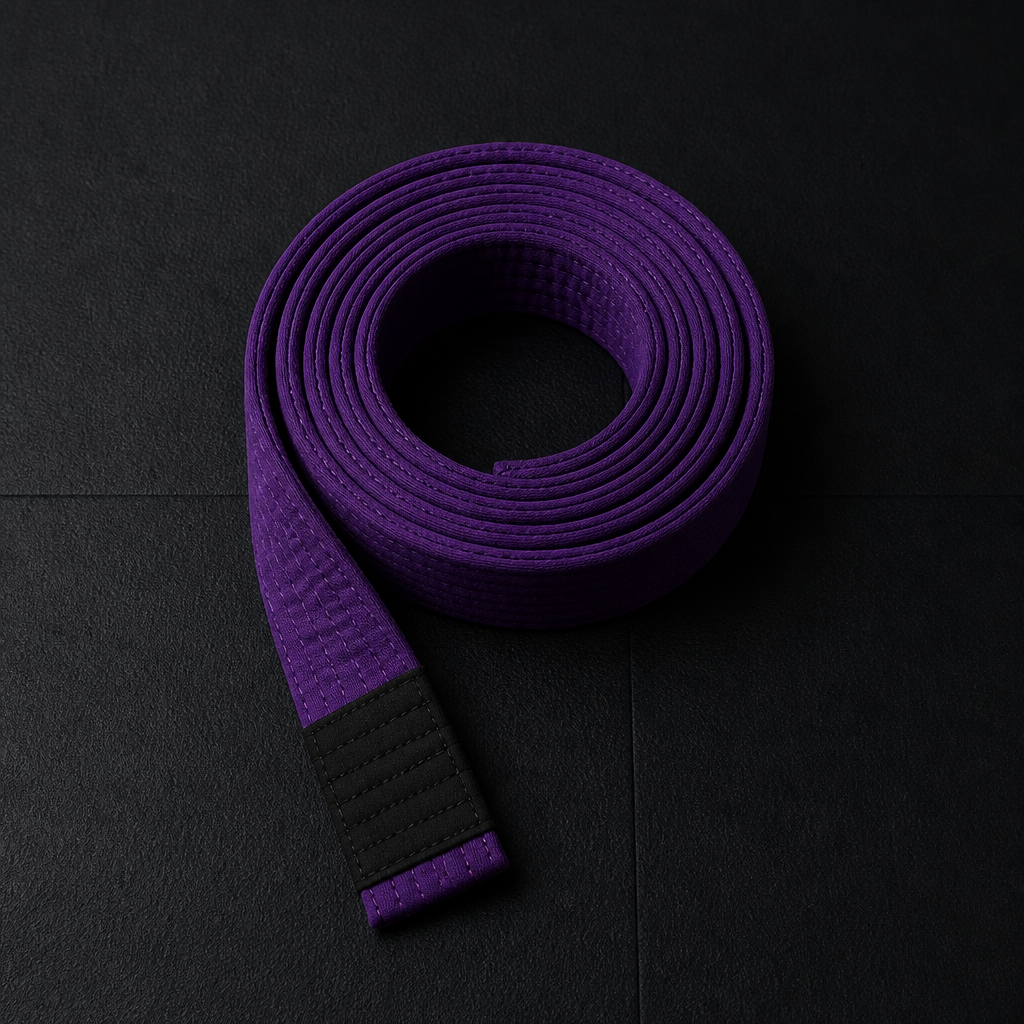
Purple belt: intermediate. More complex combinations, stronger defense, and the ability to teach beginners.

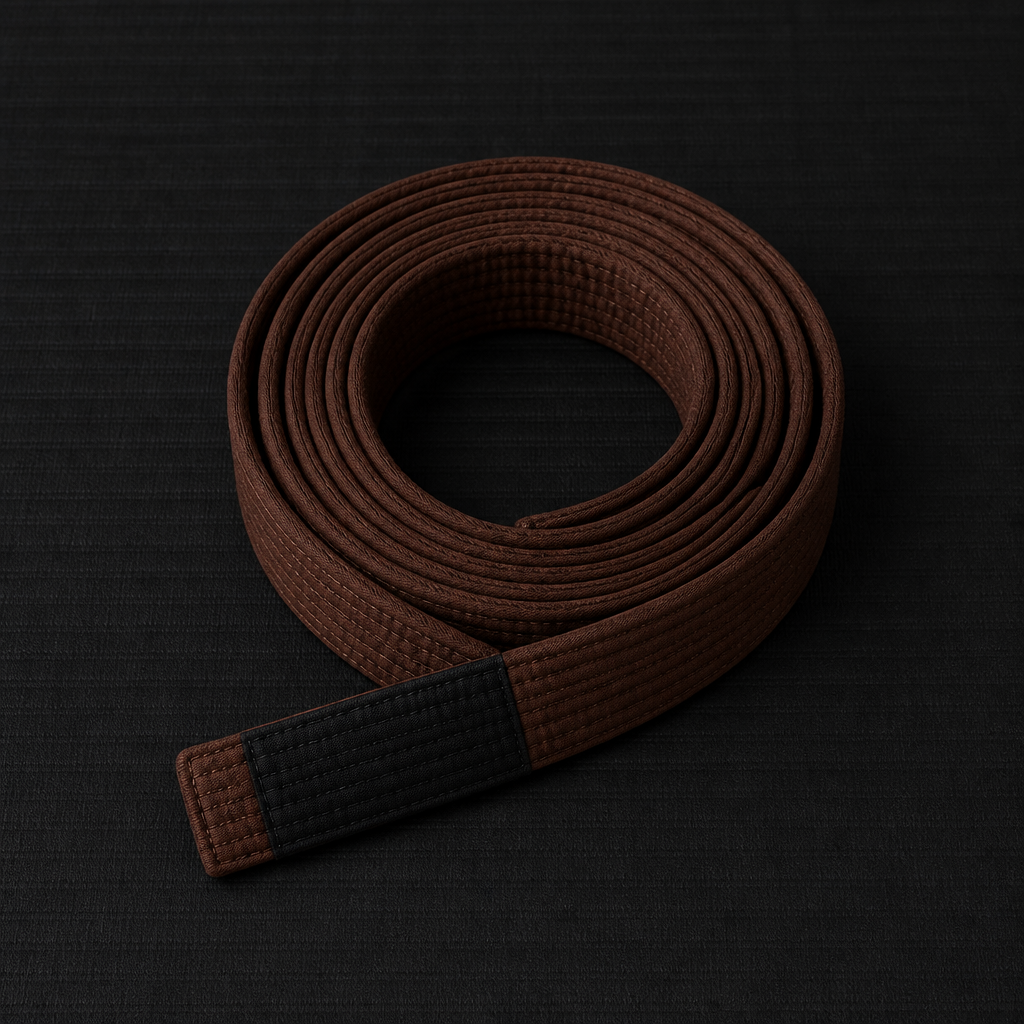
Brown belt: advanced. Refining details and preparing for the black belt level.

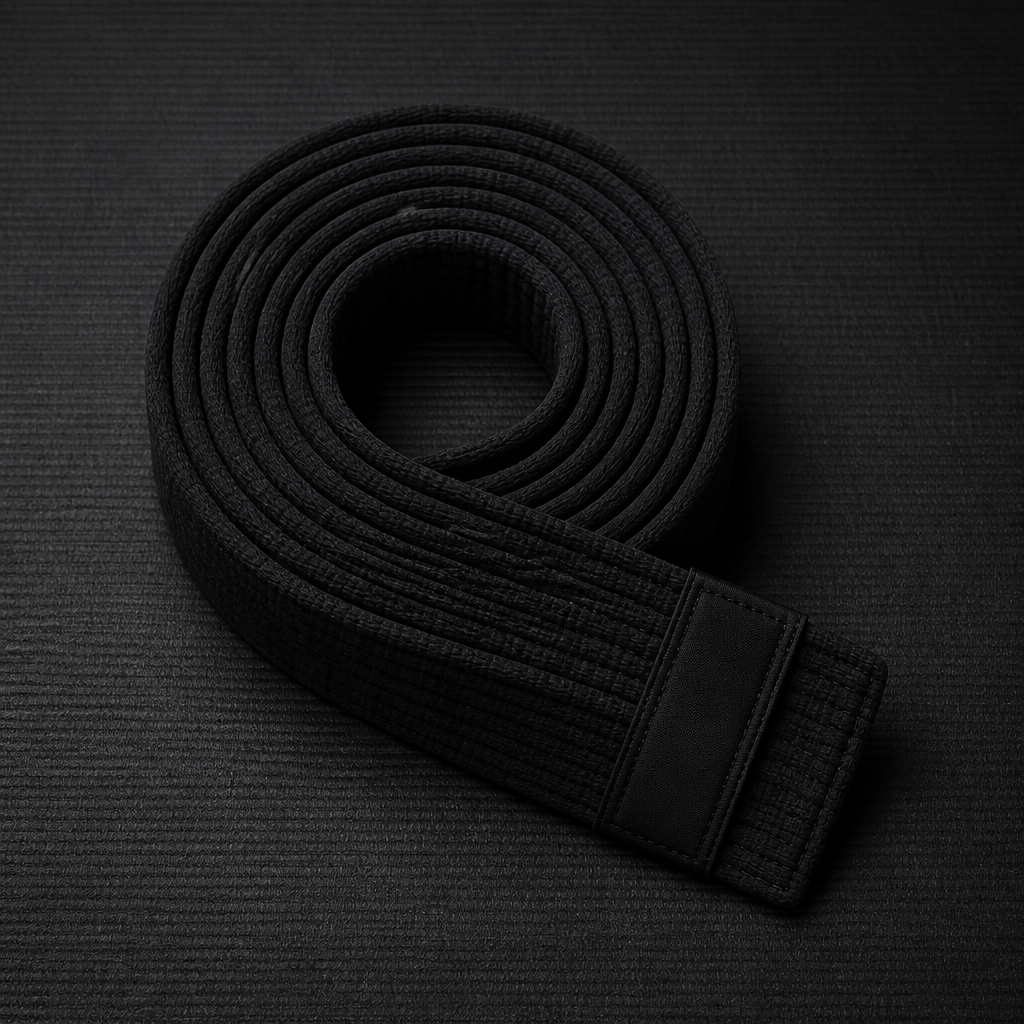
Black belt: mastery of fundamentals across many years, not just techniques.

Progression depends on time on the mat, consistency, attitude, and contribution to the team — not just skill.

Instructional videos are educational and are not a substitute for supervised training. Do not practice submissions or takedowns without qualified coaching and a consenting partner.

Take the belt guide with you — print it or save the PDF for your gym bag.

Download PDF

Adjust by training frequency

The baseline these published averages assume. Timelines below show cumulative time on the mat at 3 sessions per week.

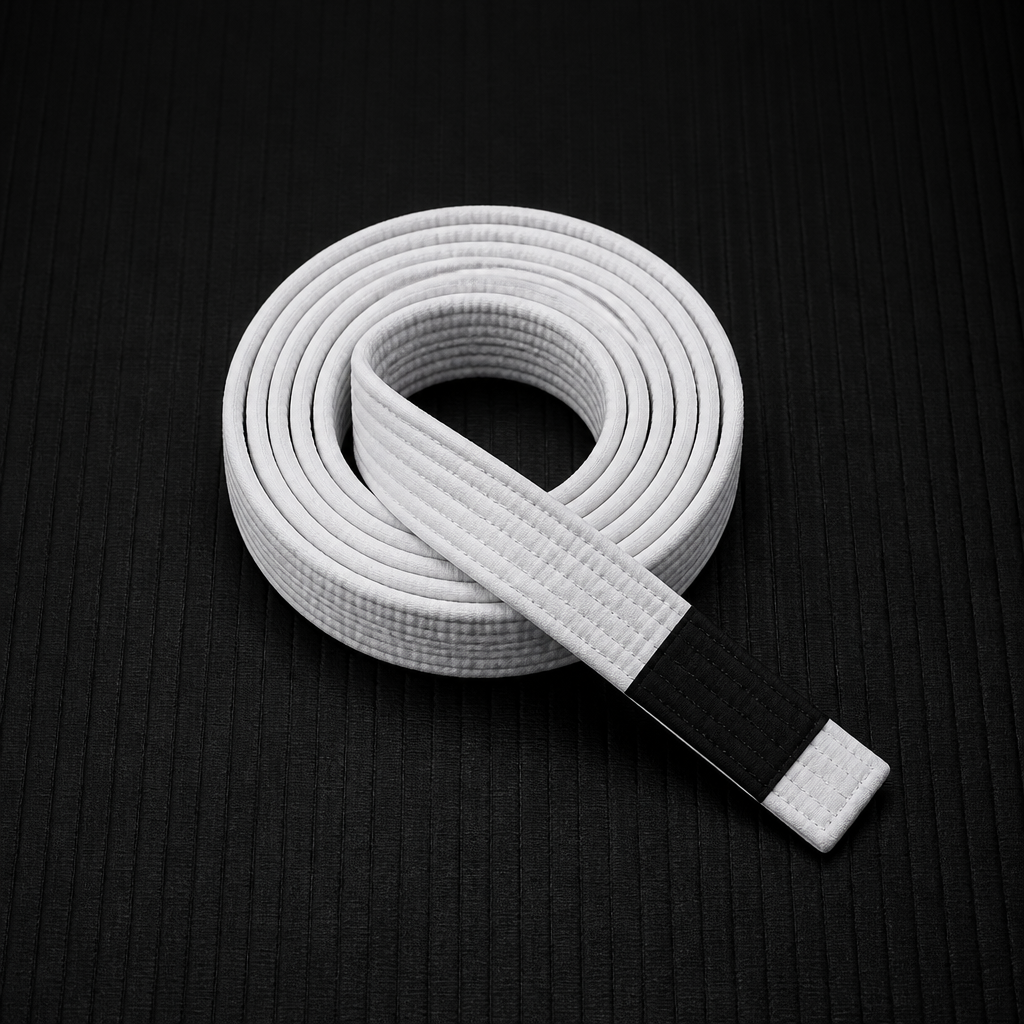
  • White Brazilian Jiu-Jitsu belt coiled on a dark mat, representing the beginning of humility and the beginner phase

    White Belt

    Average timeline
    1–2 yr on the mat
    Baseline (3x per week): First 1–2 years
    Skill level
    Beginner
    What this phase means
    The beginning of humility

    Everything is new. The white belt learns how to fall, breathe, move on the ground, and survive without panic. This phase is about showing up coachable, protecting training partners, and building the habits that keep a room safe for decades.

    Click to explore
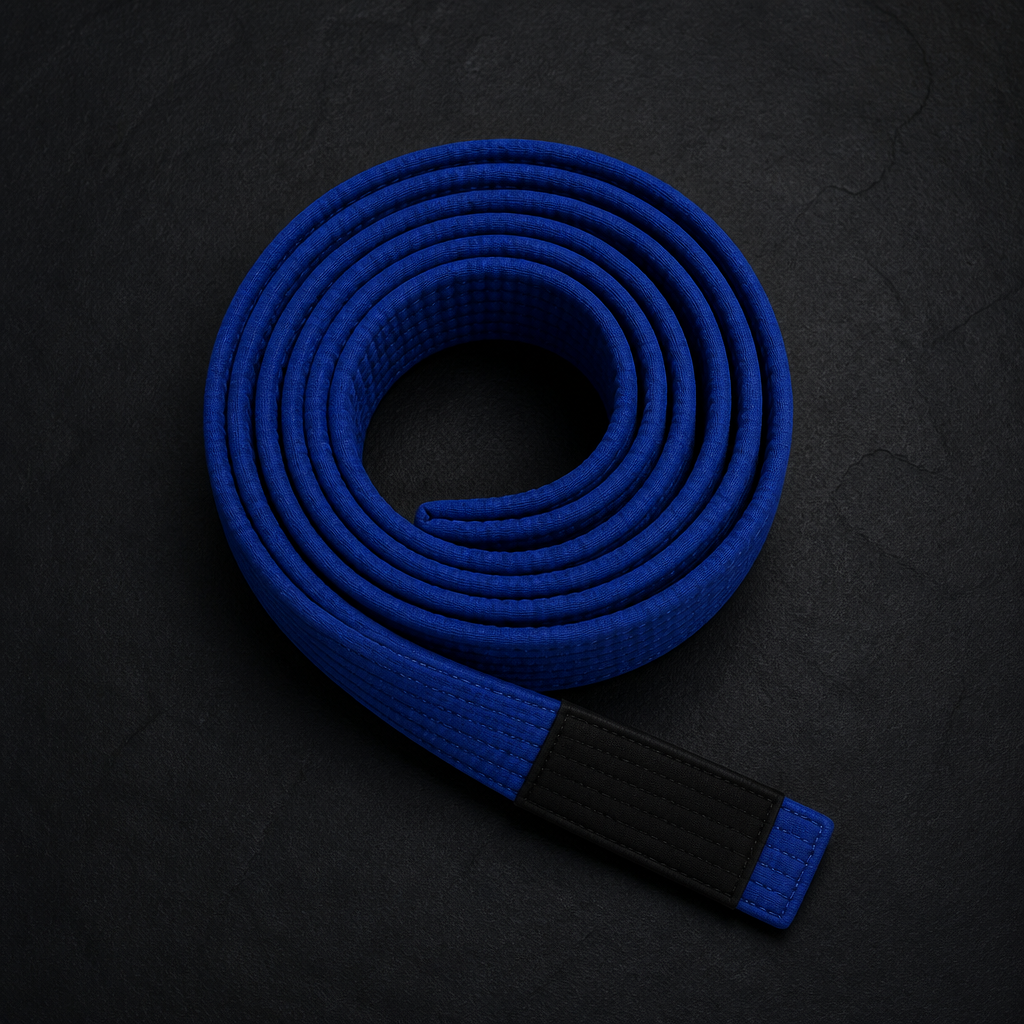
  • Blue Brazilian Jiu-Jitsu belt coiled on a dark mat, representing the developing practitioner building their first game

    Blue Belt

    Average timeline
    2–4 yr on the mat
    Baseline (3x per week): Roughly 2–4 years total
    Skill level
    Developing practitioner
    What this phase means
    Building your first game

    Blue belt is the first major milestone. Techniques begin to connect into sequences, and the grappler starts choosing preferred positions. It is also a common plateau — ego must stay low because the map is finally large enough to expose every gap.

    Click to explore
  • Purple Brazilian Jiu-Jitsu belt coiled on a dark mat, representing intermediate refinement, teaching, and personal style

    Purple Belt

    Average timeline
    4–7 yr on the mat
    Baseline (3x per week): Roughly 4–7 years total
    Skill level
    Intermediate
    What this phase means
    Refinement and teaching

    Purple belts combine attacks from multiple positions and develop strong defensive recoveries. Many begin helping beginners because explaining a technique forces understanding. This is where personal style becomes visible and discipline separates progress from stagnation.

    Click to explore
  • Brown Brazilian Jiu-Jitsu belt coiled on a dark mat, representing advanced polish and the final sharpening before black belt

    Brown Belt

    Average timeline
    7–10 yr on the mat
    Baseline (3x per week): Roughly 7–10 years total
    Skill level
    Advanced
    What this phase means
    Polishing the details

    Brown belt is the final sharpening before black. Small adjustments in angle, pressure, and timing create large differences. Brown belts usually mentor lower ranks and represent the academy by how they train, not just what they know.

    Click to explore
  • Black Brazilian Jiu-Jitsu belt coiled on a dark mat, representing expert stewardship and the real beginning of the journey

    Black Belt

    Average timeline
    10–15 yr on the mat
    Baseline (3x per week): 10+ years total
    Skill level
    Expert
    What this phase means
    The real journey begins

    A black belt is not the end of learning — it is proof that the student has learned how to learn. Fundamentals are deep, teaching is expected, and character matters as much as technique. In Japan, a black belt simply means “not a beginner.”

    Click to explore
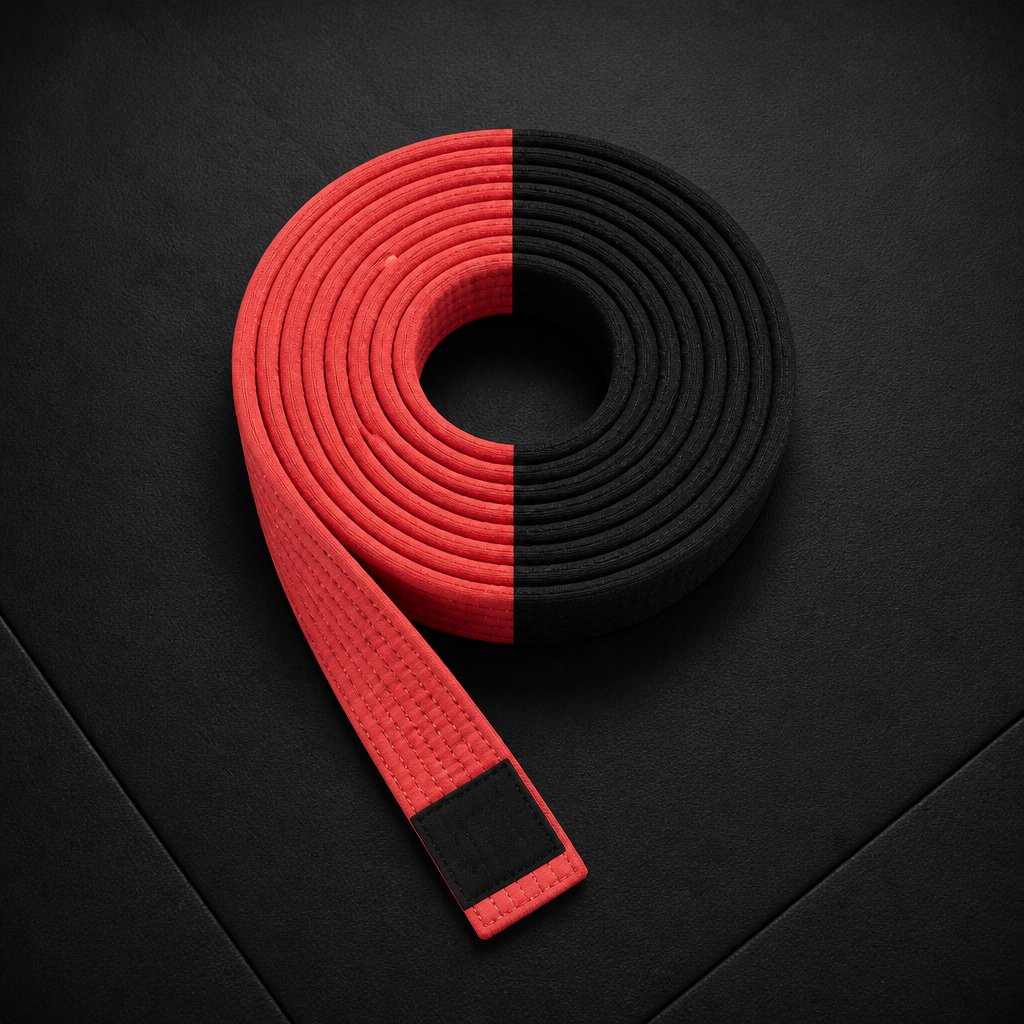
  • A red-and-black coral Brazilian Jiu-Jitsu belt coiled on a dark mat

    Coral Belt

    Average timeline
    30–35 yr on the mat
    Baseline (3x per week): 30+ years total
    Skill level
    Master / Professor
    What this phase means
    Legacy and preservation

    Coral belts are reserved for masters who have given most of a lifetime to the art. Their role shifts toward preserving lineage, raising up instructors, and guarding the culture of the mat. They are reminders that Jiu-Jitsu outlasts any single practitioner.

    Click to explore

Stripes are small marks of progress awarded within a belt. They are not mini-promotions — they are feedback that specific skills, habits, or attitudes are sticking. Most academies award up to four stripes on each colored belt before promoting to the next belt.

  • A stripe means the instructor sees consistent improvement in one or more areas: technique, timing, defense, coachability, or mat etiquette.
  • Stripes reward consistency and humility, not just winning rounds.
  • They help students see progress during long plateaus when the next belt still feels far away.

The common ceiling is four stripes per colored belt. Once a student has earned all four and the instructor believes the next belt's standards are met, promotion follows. There is no automatic timeline — four stripes does not guarantee an immediate belt change.

Black belt is not the finish line. A black belt progresses through degrees — usually one degree every three years — before eventually reaching coral and red belts. The title and responsibilities grow with each step.

  • 1st degree — Learning to teach, run classes, and guide lower belts while continuing your own study.Typical: 3 years after black belt
  • 2nd degree — A proven teacher who can develop curriculum and represent the academy with consistency.Typical: 6 years after black belt
  • 3rd degree — Deep technical authority and responsibility for the culture and standards of the room.Typical: 9 years after black belt
  • 4th degree — Recognized as a professor who can shape instructors, programs, and lineage.Typical: 12 years after black belt
  • 5th degree — A veteran leader whose influence extends beyond a single academy or region.Typical: 16 years after black belt
  • 6th degree — A master who preserves and passes on the art through instructors and community.Typical: 20 years after black belt
  • 7th degree — Transition to the red-and-black coral belt — a rank of legacy and generational stewardship.Typical: 25+ years after black belt
  • 8th degree — Red-and-white coral belt. A living archive of the art, focused on raising masters and guarding culture.Typical: 30+ years after black belt
  • 9th–10th degree — The highest ranks, reserved for founders and pioneers who have given a lifetime to Brazilian Jiu-Jitsu.Typical: Lifetime after black belt

Belt FAQ

Common questions about ranks, stripes, and timelines

A note on timelines: Every academy sets its own standards. The ranges above are honest averages based on roughly three sessions per week of consistent training. Your actual progress will depend on your dojo’s curriculum, how regularly you train, your prior grappling or athletic experience, injuries, and how coachable you remain through plateaus. Belts are earned, not bought — and the timeline is far less important than the person you become on the way.

Journey note

“In Japan, a black belt simply means 'Not a Beginner'.”

That is when the journey actually begins.

Glossary

Phase meanings and expected skills

Each belt phase has a specific meaning and a set of expected skills. These are honest benchmarks, not guarantees — progress depends on consistency, humility, and time on the mat.

  • White Belt

    “The beginning of humility”

    Recognizing you know nothing, submitting to the process, and prioritizing safety and coachability over performance.

    Expected skills

    • Safe falling and basic breakfalls
    • Frames, posture, and positional awareness
    • How to tap and protect training partners
    • Hygiene, etiquette, and consistent attendance
    • Listening before speaking on the mat
  • Blue Belt

    “Building your first game”

    Moving from isolated techniques into personal sequences and preferred positions you can return to under pressure.

    Expected skills

    • 2–3 reliable escapes from bad positions
    • 1–2 guard passes with pressure or speed options
    • Basic submissions and their setups
    • Chaining techniques into simple sequences
    • Rolling with control and a lower injury rate
  • Purple Belt

    “Refinement and teaching”

    Converting broad knowledge into clean execution and learning the art more deeply by teaching others.

    Expected skills

    • Combining attacks from multiple positions
    • Strong defensive recoveries and scrambles
    • Helping beginners learn fundamentals
    • Developing a recognizable personal style
    • Composure and decision-making under pressure
  • Brown Belt

    “Polishing the details”

    Small adjustments in angle, pressure, and timing that separate a good grappler from an excellent one.

    Expected skills

    • Precise pressure, leverage, and timing
    • Mentoring lower belts by example
    • Diagnosing weaknesses in self and others
    • Competing or pressure-testing if desired
    • Representing the academy through conduct
  • Black Belt

    “The real journey begins”

    Mastery is not a finish line; it is the transition from student to steward who can learn and teach the art independently.

    Expected skills

    • Deep, adaptable fundamentals
    • Curriculum development and class planning
    • Leadership and culture-setting
    • Self-directed learning and research
    • Character that matches technical knowledge
  • Coral Belt

    “Legacy and preservation”

    Passing Jiu-Jitsu to the next generation and protecting the culture, values, and lineage of the art.

    Expected skills

    • Preserving and documenting lineage
    • Raising up instructors and leaders
    • Guarding the culture of the mat
    • Long-term academy and community health
    • Generational mentorship beyond technique

Positions

Learn the map before the drills

Every drill on Friday starts from a named position. Guard, half guard, side control, mount, back control, and turtle — knowing the names is most of the beginner learning curve.

Watch: The most common Jiu-Jitsu positions

Text summary

A tour of the positions you will hear named on the mat — guard, half guard, side control, mount, back control, and turtle — and what each side is trying to accomplish.

Read the transcript — Position-by-position walkthrough

Positions are named by who controls whose hips and chest, not by who is on top.

Closed guard: bottom player wraps the legs around the torso and controls posture and distance.

Half guard: bottom player holds one leg; the knee shield and underhook decide the exchange.

Side control and mount: top player pins chest-to-chest or sits on the torso; bottom player frames, bridges, and shrimps.

Back control: hooks or a body triangle behind the partner; hand fighting is the defense.

Turtle: kneeling and folded — learn neck safety and the sit-out before attacking from here.

Instructional videos are educational and are not a substitute for supervised training. Do not practice submissions or takedowns without qualified coaching and a consenting partner.

Watch: The main Jiu-Jitsu guards

Text summary

A tour of the guards you will see on Friday — closed, half, butterfly, open, and de la Riva — and what each one is trying to control: distance, posture, and your partner's hips.

Read the transcript — Guard-by-guard walkthrough

A guard is any bottom position where your legs and frames manage distance and posture.

Closed guard: ankles locked, break posture, control the arms and hips.

Half guard: one leg trapped; the knee shield and underhook decide who advances.

Butterfly guard: hooks inside the thighs, chest connection, elevate rather than push.

Open and de la Riva guards use feet and grips at range — beginners start with closed and half.

Instructional videos are educational and are not a substitute for supervised training. Do not practice submissions or takedowns without qualified coaching and a consenting partner.

Submissions

Recognize it early, tap in time

Beginners are not asked to hunt submissions. You are asked to recognize them early and tap without hesitation. Prohibited moves for the session are reviewed on the mat before any live work.

Watch: Most common beginner submissions

Text summary

The submissions a new grappler meets first, and — more importantly — how to recognize them early and tap in time. Prohibited moves for the session are reviewed on the mat before any rounds.

Read the transcript — Recognize and tap

Recognize the setup before the finish: grips, angle, and closing space are the warnings.

Tap early, tap loudly, and release immediately when your partner taps.

Apply slowly and let your partner respond — cranking is how people get hurt.

Youth and mixed-experience rounds follow the session's prohibited-move list without exception.

Instructional videos are educational and are not a substitute for supervised training. Do not practice submissions or takedowns without qualified coaching and a consenting partner.

Sport scoring

Points chart

Optional context only — our gathering is not a competition. This is one IBJJF-style ruleset; rules differ by federation, event, age, and belt, so always read the current rulebook.

Action or positionPoints
Takedown2
Sweep from guard2
Knee-on-belly2
Guard pass3
Mount or back mount4
Back control with qualifying hooks or body triangle4
SubmissionEnds the match
Side control by itself0
Guard pull0
Reversal that does not satisfy sweep criteriaGenerally 0

Watch: Sport Jiu-Jitsu point scoring

Text summary

How points are awarded in sport Jiu-Jitsu under an IBJJF-style ruleset, with the position-by-position chart. Rules differ by federation, event, age, and belt — always read the current rulebook.

Read the transcript — Points chart explained

Points reward improving position with control, not activity by itself.

Two points: takedown, sweep from guard, knee-on-belly.

Three points: guard pass.

Four points: mount, back mount, and back control with qualifying hooks or a body triangle.

Zero points: guard pull, side control by itself, and reversals that do not meet sweep criteria.

A submission ends the match regardless of the score.

Instructional videos are educational and are not a substitute for supervised training. Do not practice submissions or takedowns without qualified coaching and a consenting partner.

Self-defense

Awareness first, technique last

Awareness, de-escalation, disengagement, and escape come before any technique. Falling safely, standing back up, and escaping bottom positions are the highest-value skills of your first night.

Watch: Jiu-Jitsu in self-defense

Text summary

An honest look at where grappling fits in self-protection: awareness, de-escalation, and leaving come first; control and escape skills are the last resort, not the first move.

Read the transcript — Order of operations

Most conflict is avoided by noticing it early and creating distance.

De-escalation with words, posture, and space resolves far more situations than technique.

If contact happens, the priority is getting back to your feet and getting out — not finishing a fight.

Standing up safely, breaking grips, and escaping bottom positions are the highest-value skills.

Control is used to protect yourself or someone else, never to punish.

Instructional videos are educational and are not a substitute for supervised training. Do not practice submissions or takedowns without qualified coaching and a consenting partner.

Watch: Falling safely and standing back up

Text summary

The first skills of the night: breaking your fall and using the technical stand-up to get back to your feet with your hands free and your base under you.

Read the transcript — Falling and standing

Break your fall with your whole side, chin tucked, and never post a straight arm.

The technical stand-up keeps your hands free as you rise.

Create distance first, then stand — standing inside a grip invites another takedown.

Instructional videos are educational and are not a substitute for supervised training. Do not practice submissions or takedowns without qualified coaching and a consenting partner.

Watch: Escapes and survival fundamentals

Text summary

Survival and escape before offense: frames, bridges, and hip movement from side control and mount — the ground focus most first classes build from.

Read the transcript — Survive, then escape

Protect your neck and elbows first; frames create the space you need.

Bridge and shrimp to move your hips — arms alone will not move a heavier partner.

Escape to a better position, not into a scramble you cannot control.

Breathe. Panic burns the energy you need to finish the round safely.

Instructional videos are educational and are not a substitute for supervised training. Do not practice submissions or takedowns without qualified coaching and a consenting partner.

Fathers and sons

Sons ages 13–17

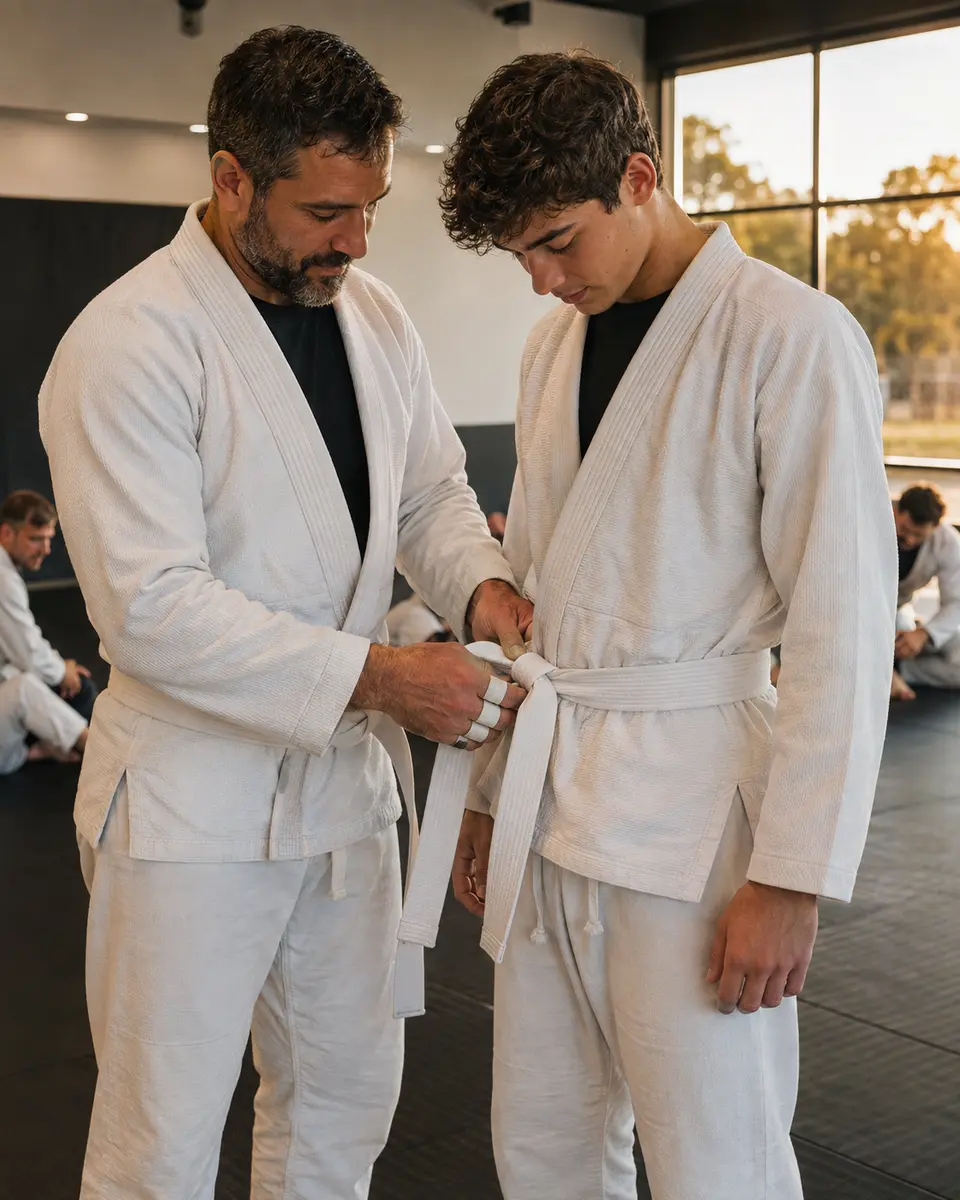
A man and a teenage boy in white gis kneeling side by side, adjusting their belts
Brand photography for Train My Hands for War. Not a photograph of a specific session, organizer, or attendee.

Sons ages 13–17 are welcome when the host academy approves youth participation for the session. A parent or legal guardian must register them, complete all required documents, remain on-site, and train or observe according to the approved plan. Pairing is based on age, size, maturity, and experience—not belt alone.

There are no drop-offs, no unsupervised one-on-one adult and minor interaction, no private transportation, no closed-room instruction, and no private direct messaging with minors. Photo and video permission is separate, optional, and never a condition of participation.

Hygiene and illness

Protect the room

  • Arrive clean, in a freshly washed and fully dried gi.
  • Shower promptly after training. Machine-wash and dry gi, rashguard, belt, towels, and supports after every use.
  • Cover ordinary clean cuts securely before training.
  • Do not train with an unexplained rash, ringworm, herpes-like lesions, impetigo, a draining wound, fever, vomiting or diarrhea, or a suspected contagious illness.

Tapping and consent

Tap early. Release immediately.

A tap may be by hand, foot, or voice. “Tap,” “stop,” a pain sound, loss of responsiveness, or a coach stoppage ends the action immediately. Every round requires consent: anyone may decline or stop a round with anyone, at any time, without explanation. Consent outranks rank.

FAQ

Questions we get every month

Is this an open mat?
Not exactly. It is a guided 90-minute group session with prayer, instruction, drilling, and controlled live work.
Do I need experience?
No. Beginners get their own lane with positional work and coach-directed drilling.
Does it cost anything?
No. It is free to attend. This is a Connect Group, not a membership.
Will I get a belt or stripe?
No. We award no rank and honor every member's home academy.
Where is it?
Hosted at 3 Embers Grappling Academy, 320 Industrial Blvd., Ste. 206, McKinney, TX 75069.